Nevada’s ban-the-box law does not eliminate criminal-history questions from every government job application. Instead, it controls when certain public employers may consider an applicant’s criminal history.
For someone applying for a Nevada government job, the timing depends on which public body is hiring. State agencies, counties, incorporated cities, and unincorporated towns do not all use the same trigger. A sealed criminal record can also change what the employer may consider and how the applicant may lawfully answer once the question is asked.
Which employers Nevada’s ban-the-box law actually covers
Nevada’s ban-the-box provisions apply primarily to specified public employers.
NRS 613.330 identifies appointing authorities governed by Chapter 284, the Administrator of the Division of Human Resource Management, and governing bodies of counties, incorporated cities, and unincorporated towns.
A private Nevada employer is not included in that list.
That means Nevada’s public-employment timing rules should not be treated as a statewide ban on criminal-history questions for every employer.
The exact public entity also matters. Legislative and Judicial Department personnel are generally outside the Chapter 284 personnel system, and a school district is not the same thing as a county, city, town, or Chapter 284 appointing authority.
School employees instead operate under separate fingerprint and criminal-history rules.
Anyone relying on Nevada’s ban-the-box protections should therefore first identify which government body is actually hiring.

When can a Nevada public employer consider criminal history?
Nevada’s public-employment statutes generally say criminal history may be considered only after specific events in the hiring process.
The exact trigger depends on whether the applicant is seeking a state position or a local government position.
State jobs and the certification trigger
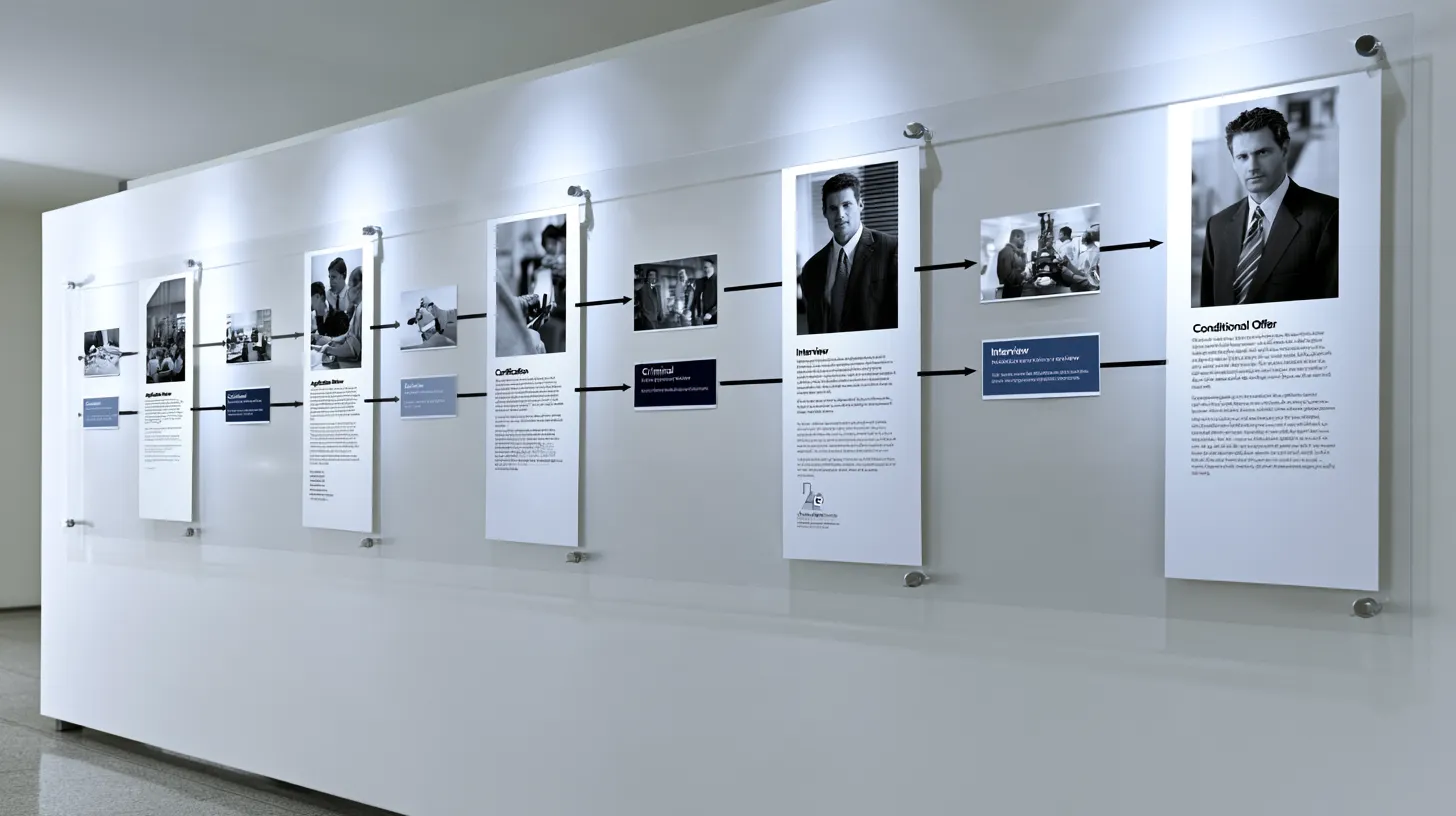
For certain Nevada state jobs, criminal history may be considered after the earliest of several events, including the final in-person interview, certification by the Administrator, or a conditional offer of employment.
The certification trigger is especially important because it can occur before an applicant receives an interview or job offer.
That means a state applicant should not assume the criminal-history question must always wait until after a conditional offer.
Depending on the hiring process, the legal trigger may have occurred earlier.
County, city, and town jobs use a different rule
For county, incorporated city, and unincorporated town positions, the timing rule is generally tied to the earlier of the final in-person interview or a conditional job offer.
Unlike the state-employment provisions, those local-government statutes do not include the same certification trigger.
The practical point is that a conditional offer is not always the first moment criminal history can be considered.
Once the applicant completes the final in-person interview, the statutory timing requirement may already be satisfied.
An employer may warn about a legal disqualification earlier
Nevada law also allows a public employer to provide certain information about criminal-history restrictions before it is otherwise allowed to evaluate the applicant’s record.
An employer may inform an applicant that a particular state or federal law automatically disqualifies someone with a specific criminal history from a particular position.
That is different from asking the applicant to disclose criminal history prematurely.
A lawful warning about a statutory disqualification does not necessarily violate Nevada’s ban-the-box procedure.
What happens when the criminal-history question finally arrives?
Once the employer reaches the point where criminal history may legally be considered, two separate rules become important.
The first concerns what the public employer may consider.
The second concerns what a person with a sealed Nevada record may legally say.
A sealed conviction changes what the employer may consider
Nevada’s public-employment statutes identify certain records that covered public employers generally may not consider in connection with an employment application.
Among those are records of convictions that have been dismissed, expunged, or sealed.
That means sealing can do more than change how an applicant responds to a question. In covered public-employment situations, it can also change whether that conviction belongs in the employer’s decision-making process at all.
The exact language varies slightly depending on whether the hiring body is a state appointing authority, the Division of Human Resource Management, or a local government body.
Applicants should therefore consider both the sealing statute and the specific public-employment provision governing the position.
A sealing order also changes how the applicant may answer
Under NRS 179.285, once a Nevada criminal record is properly sealed, the proceedings are generally deemed never to have occurred, subject to statutory exceptions.
The person may generally answer employment-related inquiries in accordance with the legal effect of that sealing order.
That protection can apply to the arrest, conviction, dismissal, or acquittal contained in the sealed record.
Nevada uses record sealing rather than expungement, so the legal effect comes from the sealing statutes and the court order itself.
For someone applying for a government job, the sequence matters: the order must exist before the applicant relies on the legal protections that come with sealing.
The sealing route can affect who still has access
Not every sealed record is treated identically.
NRS 179.301 identifies specific circumstances in which certain agencies may still inspect records sealed under Nevada’s standard sealing statutes.
Ordinary public hiring authorities are not generally listed among those inspection exceptions.
There is, however, an important exception involving sexual-offense information.
The Nevada Central Repository may retain access to certain sealed sexual-offense information and may notify employers where authorized by law.
Records sealed through Nevada’s reentry-program route can also carry different access rules. NRS 179.259 permits professional licensing boards to inspect certain records sealed under that section when determining suitability for a professional license.
That licensing-board exception is different from ordinary government employment, but it illustrates why the statute used to seal the record matters.

Timing the sealing petition against the hiring process
Before a sealing order exists, a covered public employer may still consider qualifying criminal-history information once the statutory timing trigger has been reached.
For some state jobs, the employer may refuse certification or rescind a conditional offer after considering the factors required by Nevada law.
After a qualifying conviction is properly sealed, however, the public-employment statutes can restrict consideration of that sealed conviction.
The practical question is therefore often whether the record sealing process can be completed before the employer reaches the lawful criminal-history stage.
Nevada’s sealing waiting periods and court processing times determine whether that is realistic.
A record sealing petition does not guarantee a job, and sealing does not eliminate every position-specific disqualification. It changes the treatment of qualifying criminal records, not the employer’s broader authority to choose among qualified applicants.
Positions that are excluded from the timing rule
Nevada’s ban-the-box provisions contain several important exceptions.
The timing protections generally do not apply to applicants seeking employment as a peace officer or firefighter.
They also do not apply to certain positions involving physical access to computers or equipment used to access the Nevada Criminal Justice Information System or the National Crime Information Center.
That exception can reach more than obvious law-enforcement positions because it depends on access to criminal-justice systems rather than job title alone.
An even broader exception applies when a specific state or federal law disqualifies a person from a particular position because of a particular criminal history.
When another law creates that disqualification, the ordinary ban-the-box timing rule can give way.
An employer’s internal preference is not the same as a statutory disqualification. The exception depends on an actual provision of state or federal law.
Public job applicants generally cannot request an advance criminal-history determination
Nevada gives many professional-license applicants a procedure for asking a regulatory board in advance whether a criminal history will disqualify them.
That process generally does not apply to an ordinary government employment application.
The professional-license procedure under NRS 622.085 applies to regulatory bodies governing occupations under Title 54, while Nevada’s public-employment ban-the-box provisions operate under different titles and concern employment rather than professional licensing.
For a government job applicant, the more practical issue is usually determining record sealing eligibility before the hiring process reaches the criminal-history stage.
Reviewing the actual Nevada criminal record early can help identify convictions that may already qualify for sealing.
What happens when criminal history is used against the applicant?
When covered Nevada public employers use criminal history to make an adverse employment decision, the statutes require more than a simple verbal rejection.
For certain state employment decisions, the employer must consider factors including the relationship between the offense and the position, the nature and seriousness of the offense, the applicant’s age when it occurred, the amount of time that has passed, and evidence of rehabilitation.
Recent pending charges can also be considered in limited circumstances.
If criminal history is the basis for rejecting an applicant, Nevada law can require the decision to be provided in writing, identify criminal history as the reason, and give the applicant an opportunity to discuss the basis for the decision with human resources or a designated representative.
Those protections create a record of what happened and give the applicant an opportunity to address inaccurate information, rehabilitation, or the relationship between the conviction and the position.
What if the employer ignores the required procedure?
Failing to follow Nevada’s public-employment criminal-history procedure can constitute an unlawful employment practice under NRS 613.330.
Nevada law allows an injured applicant to bring a complaint to the Nevada Equal Rights Commission even when the complaint is based on the criminal-history procedure rather than traditional discrimination based on characteristics such as race or sex.
Deadlines matter.
The source material identifies a 300-day filing period for certain complaints, measured from the occurrence of the alleged unlawful practice.
Anyone considering a complaint should work from the actual date of the employer’s action and review the written rejection promptly.

Frequently Asked Questions
Does Nevada’s ban-the-box law apply to private employers?
Generally, the specific Nevada provisions discussed here apply to the public employers identified by statute, not to every private employer in the state. A private Nevada employer may therefore follow different rules about when it asks about criminal history. If the applicant has a properly sealed Nevada record, the legal effect of that sealing order comes from NRS 179.285 rather than from the public-employment ban-the-box provisions.
Do I have to disclose a sealed Nevada record on an out-of-state or federal application?
A Nevada sealing order generally controls Nevada records and Nevada custodians, but it does not automatically control how another state or the federal government treats the same information. The Nevada public-employment timing rules discussed here also do not govern federal employment applications. Applicants dealing with an out-of-state or federal position should review the rules that apply to that specific employer and jurisdiction.
What happens if a conditional job offer is withdrawn after a background check?
If a public employer covered by Nevada’s ban-the-box statutes uses criminal history to withdraw an offer, the applicant may be entitled to a written explanation and an opportunity to discuss the decision under the applicable Nevada provision. If the employer relied on a consumer reporting agency, federal law may also require the applicant to receive a copy of the report and information about their rights before final adverse action is taken.
Conclusion
Nevada’s ban-the-box law does not prohibit every criminal-history question in public employment. Instead, it regulates when certain government employers may consider criminal history and what procedures they must follow when that history affects a hiring decision.
For applicants with a sealed Nevada record, the analysis can change significantly because sealed convictions may be excluded from consideration in covered situations and Nevada law generally allows the applicant to answer employment inquiries according to the legal effect of the sealing order.
If a past Nevada case is affecting your ability to pursue a state, county, city, or other government job, contact Record Sealing Nevada for a confidential review of your record. The first step is identifying whether the case is eligible for sealing, how long the process may take, and whether a sealing order can be completed before criminal history becomes part of the hiring decision.